
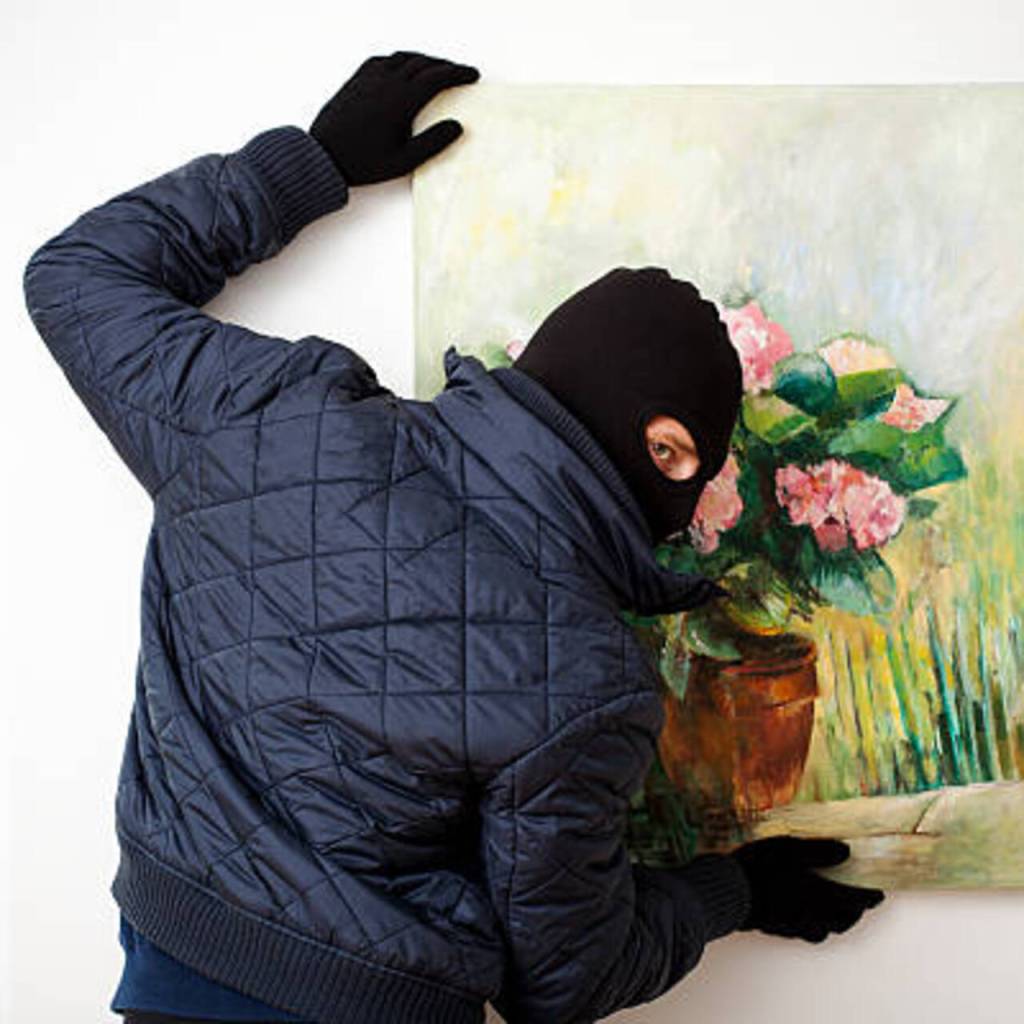
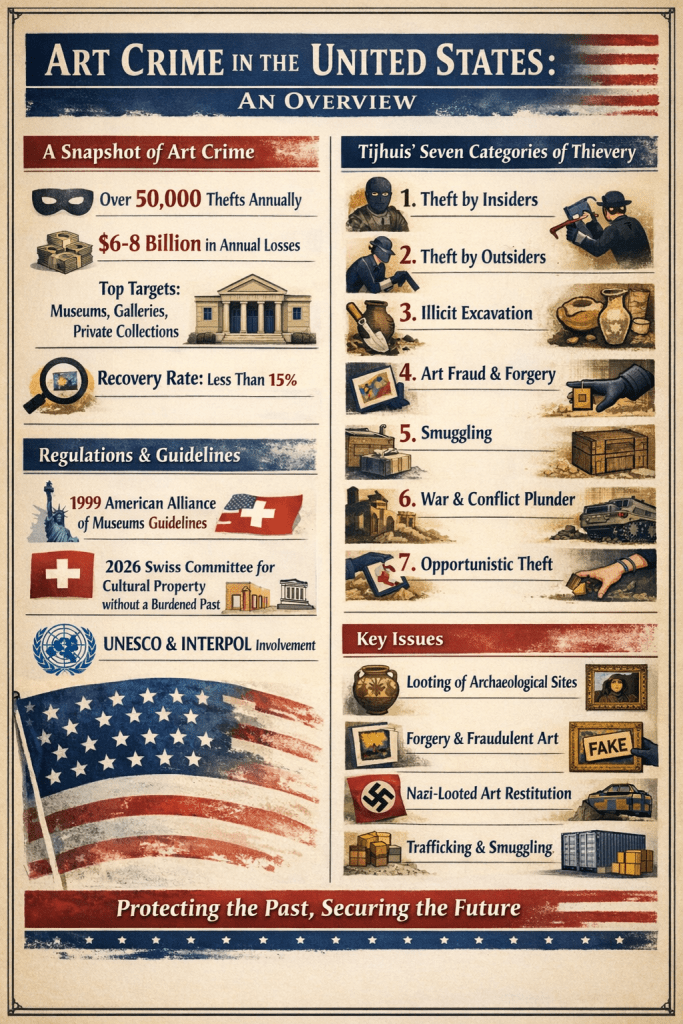
Why do thieves steal art? Why do we care? In 2009 in Santa Barbara, California, in a foundational chapter titled Who are stealing all those paintings? by A.J.G. Tijhuis, art crime scholars first framed a typology of art theft based on 39 observed theft cases that identifies seven distinct forms of thievery that have shaped how criminologists and cultural property specialists understand theft motivation and behavior. These categories are used as analytical lenses to guide law enforcement, provenance research, and museum risk analysis rather than legal definitions of theft. The seven categories Tijhuis identified are:
The ‘Dr No’ type, collector‑commissioned thefts: thefts organized or incentivized by private collectors or clients who specifically commission a thief to steal works they desire.
The compulsive thief: individuals driven by psychological impulses to steal works for personal possession or gratification.
The thefts originating from the drug trade or organised crime: thefts carried out by networks involved in broader criminal enterprises including drugs, weapons, money‑laundering and other illicit markets.
Ideological thieves with ‘higher purpose’: thefts motivated by political, social or ideological aims rather than financial gain.
Thieves as ‘art nappers’: actors who steal works to elicit ransom or negotiate exchange rather than sell them directly.
Internal thieves: insiders with access to collections, archives, storage, or transit who commit thefts by exploiting their privileged position.
Common thieves: opportunistic actors lacking specialized motive or organization, stealing when opportunity presents itself.
Tijhuis’ categories have become part of the discourse in art crime research because they surface the sociological and economic drivers of art theft, shifting conversations from abstract legal theft definitions to patterns that help predict, prevent, and mitigate theft in institutions, markets, and digital provenance systems. This typology connects with contemporary use of AI and machine learning in threat assessment, behavior detection, and provenance risk scoring as the art world evolves its governance infrastructure through technology and data.
The United States Federal Bureau of Investigations Art Crime Team (started in 2005) concentrates on art recovery, museum security, due diligence and provenance, and expat testimony in art crime cases. An estimated 90% of all art crime are insider threat thefts armed robberies. The National Gallery of Art in Washington DC is estimated to have about 200 armed guards in its employ.
The landscape of art crime in the United States is evolving rapidly, shaped by a combination of historical legacy, organized crime, market pressure, and now technology‑driven interventions. Traditionally, the U.S. has faced theft, forgery, and illicit trafficking across four main vectors: museum and gallery theft, insider theft, private collection theft, and fraud in auction or secondary markets. Notable cases like the 1990 Isabella Stewart Gardner Museum heist in Boston remain touchstones, illustrating how organized networks, insider knowledge, and high‑value targets intersect.
Since the 1990s, U.S. law has strengthened frameworks around stolen and looted art. The HEAR Act (2016, expanded 2025) and the Anti-Money Laundering Act for antiquities (2020) have criminalized concealment of ownership, extended statutes of limitations, and increased transparency obligations. Federal agencies actively collaborate with museums, auction houses, and foreign governments to trace, recover, and prevent theft.
In parallel, provenance research has shifted from reactive case-by-case investigations to predictive analytics. Emerging platforms like the National Provenance Clearinghouse (NPC, 2026) integrate AI-driven verification, linking historic ownership records, auction data, and cross-border transaction histories to identify risk before sales or loans occur. Theft today is no longer just physical: online fraud, forgery, and unauthorized digital reproduction of high-value images are rising, blending art crime with cybercrime and intellectual property violations.
From a governance perspective, the U.S. art ecosystem is at a tipping point: museums and collectors can no longer rely solely on historical compliance standards. Instead, the most resilient institutions now embed technology, ethical oversight, and cross-sector partnerships to anticipate threats, restore trust, and quantify provenance as a measurable asset in the art market.
The trajectory suggests that over the next decade, U.S. art crime prevention will become a data‑driven, transnational discipline, combining traditional enforcement, AI surveillance, and blockchain-enabled provenance to create a system where accountability and market confidence are inseparable.

 National Provenance Clearinghouse